Three new Queensland rock monitors
I think I can speak for everyone involved in the project that we’re stoked to have the paper out and for these three goannas to finally have names. I certainly never thought I’d contribute to goanna taxonomy. Below I’ve written out a short timeline of the project. Snippets of the fieldwork had previously been included in some blog entries, but were then redacted when we started working on naming them.
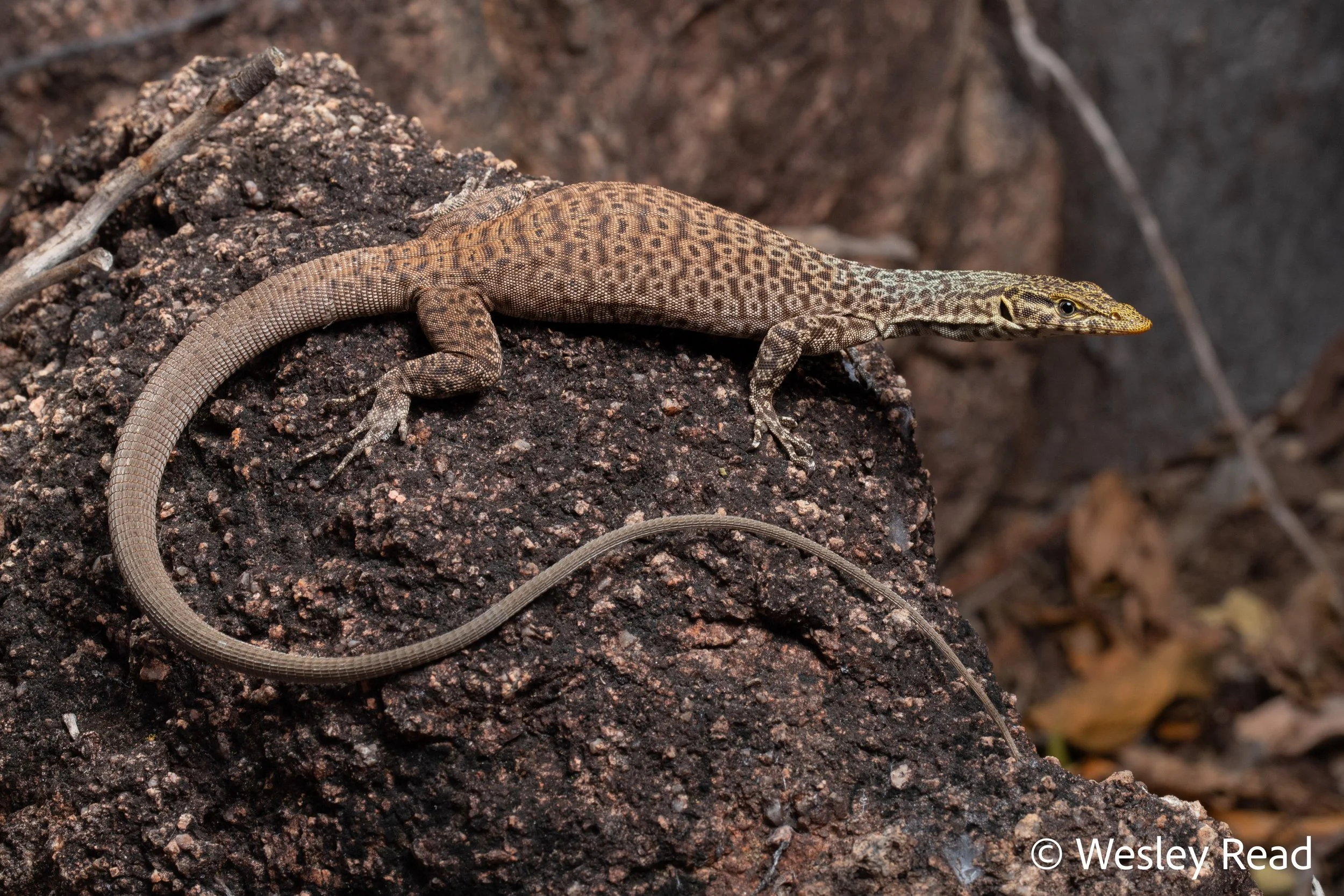
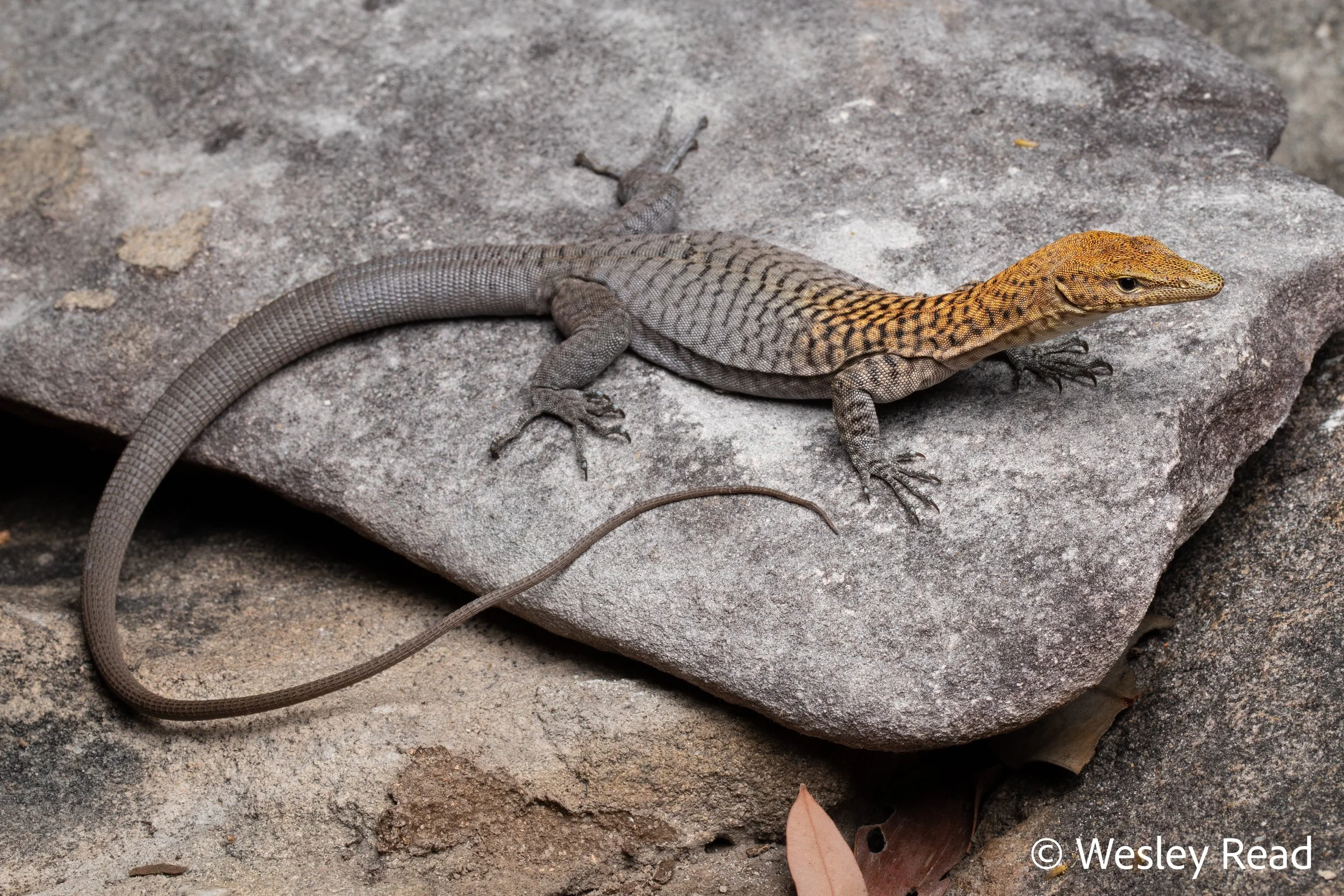
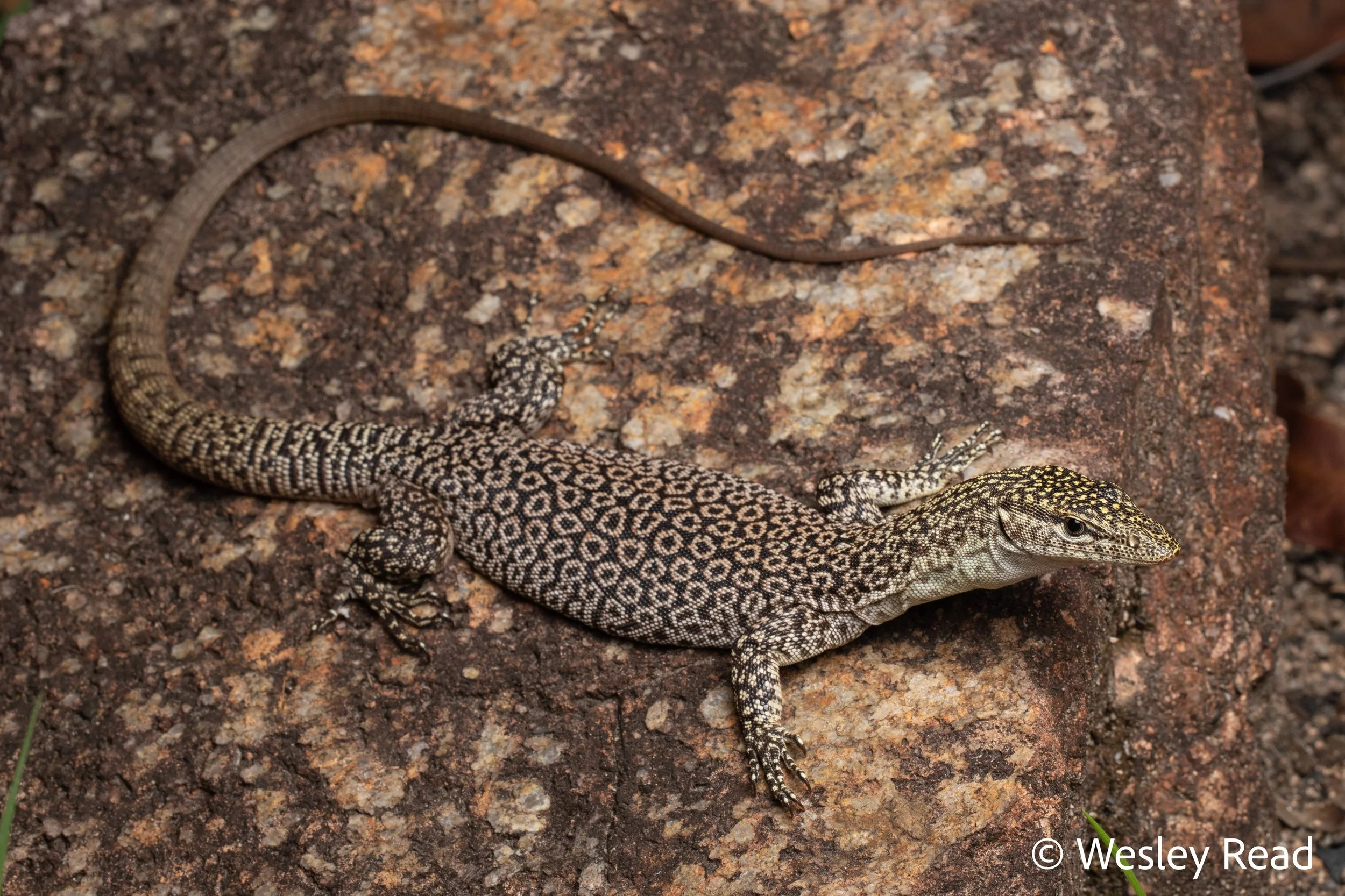
My involvement (some of the others had at least seen phosphoros/phosphoros and iridis before this) began in 2021 when Nick, Justin and I visited Gilberton on our first Qld winter raking trip. Though being there specifically for geckos, we had a lot of daylight to kill, and Nick and I were exploring along a sandstone ridge when a small monitor pinged out from under some rock. I thought little of it other than ‘tristis’ but Nick convinced me we should get a closer look. After some serious effort we got it in hand, and although a little curious about its unusual patterning, neither of us were astounded by it. How foolish we were. It wasn’t until Justin finally appeared and exclaimed “What the f*ck is that?!” that we had an inkling we might have found something cool. It seems we’d come across the first umbra to be properly examined and photographed by herpers, although a singular iNat photo of one from Cobbold Gorge exists from a few years earlier. I’m keen to hear from anyone who did find them before this (although it will sadden me). Later that same trip we also came across a handful of phosphoros north of Cooktown, which, although lovely, were less exciting as they were simply the well-known but undescribed ‘green-heads’. I will confess to trying to look down upon goannas during this period because of their associates. That of course couldn’t last, they’re simply too good of a lizard group to ignore.
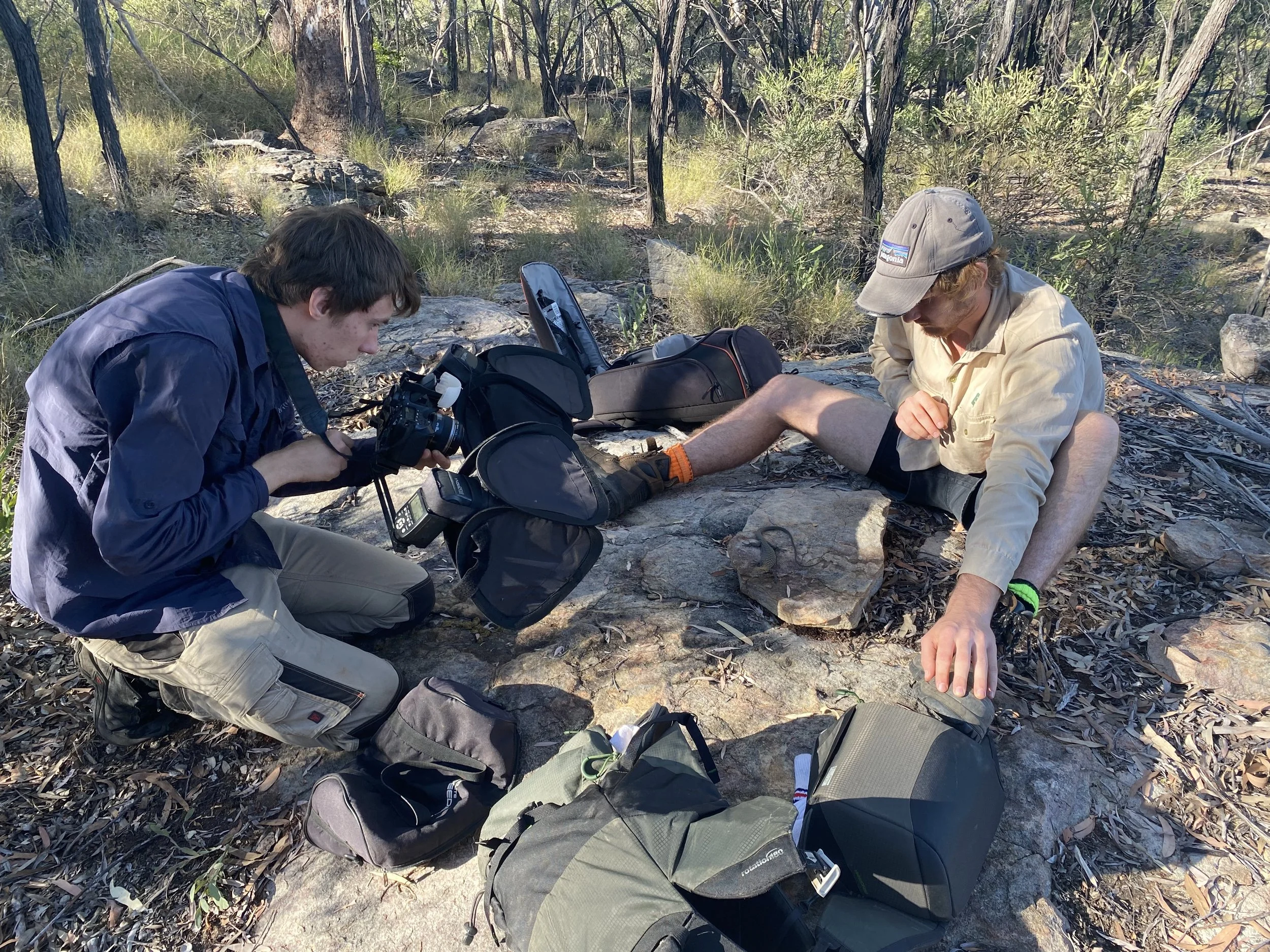
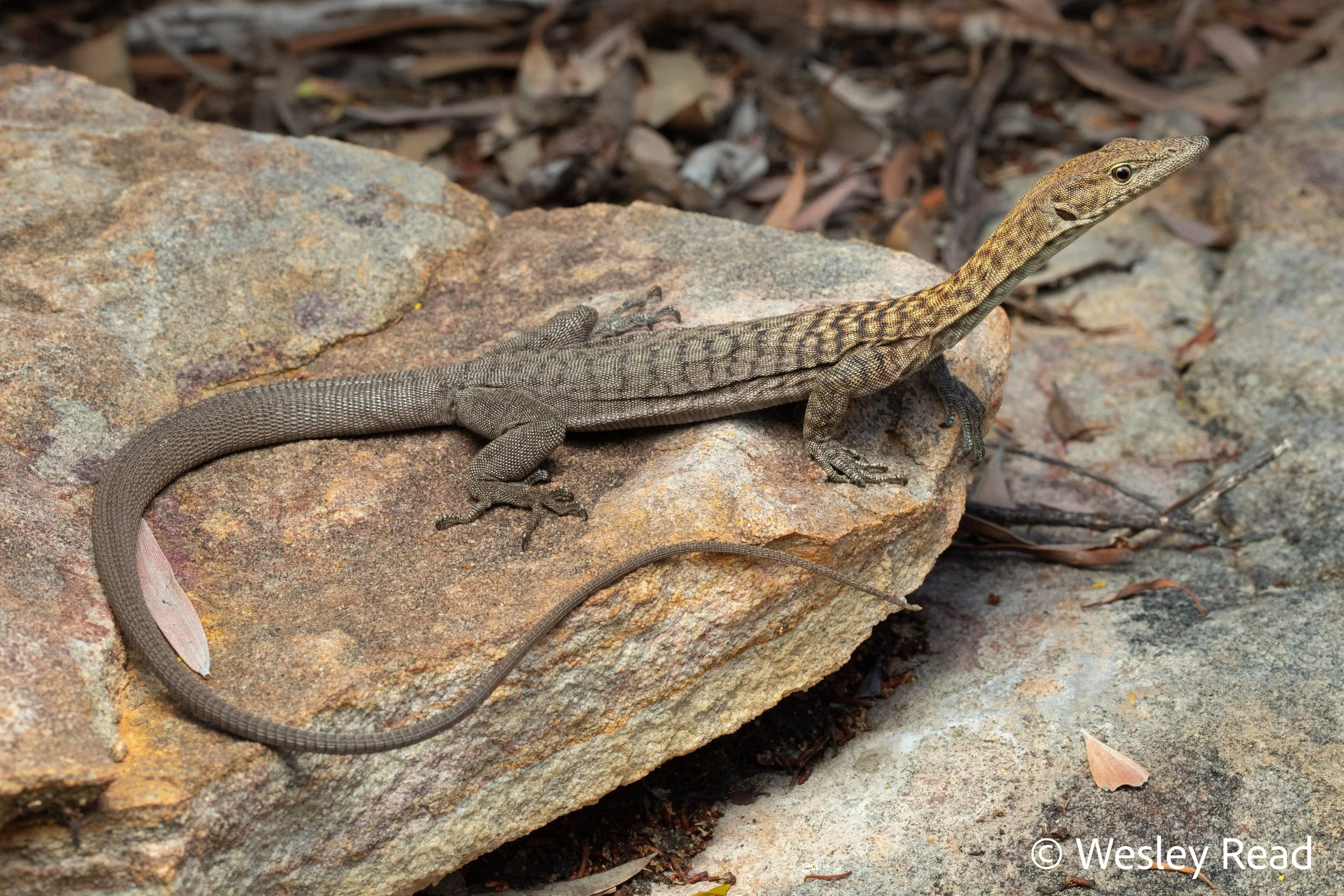
After seeing photos of our odd ‘rock tristis’, Stephen was the first to suggest we could actually do something with the group. Consequently, when we returned to north Qld almost exactly a year later in mid 2022, eyes were peeled for goannas. This time we worked in the reverse direction, starting first with several phosphoros near Cooktown. We then moved out to the Einasleigh Uplands and while looking for Lerista alia, I came across the third species, the most beautiful of the three, Varanus iridis. Once more our ignorance showed — although we were all very appreciative of her colours, we had no idea whether we had a third potential species, or simply a variation of a green-head. Yes, it’s obvious in hindsight. Yes, bar colouration, they resemble umbra more. Yes, we’re idiots. Heading back into the sandstone afterwards we had further success with umbra, finding two more individuals.
After getting back some preliminary genetic data suggesting that we did indeed have three species on our hands, Stephen, Scott and I once more headed back in mid 2023. We didn’t immediately start the trip looking for goannas; we first detoured out into the Gulf to collect the type series of Lerista karichigara. Buoyed by that success we spent several days searching for goannas in the Uplands and Wet Tropics. We did reasonably well in the end, finding two umbra (including by far the prettiest one we’ve now seen), an iridis, and three phosphoros. We were now (mostly) set to start working on the descriptions.
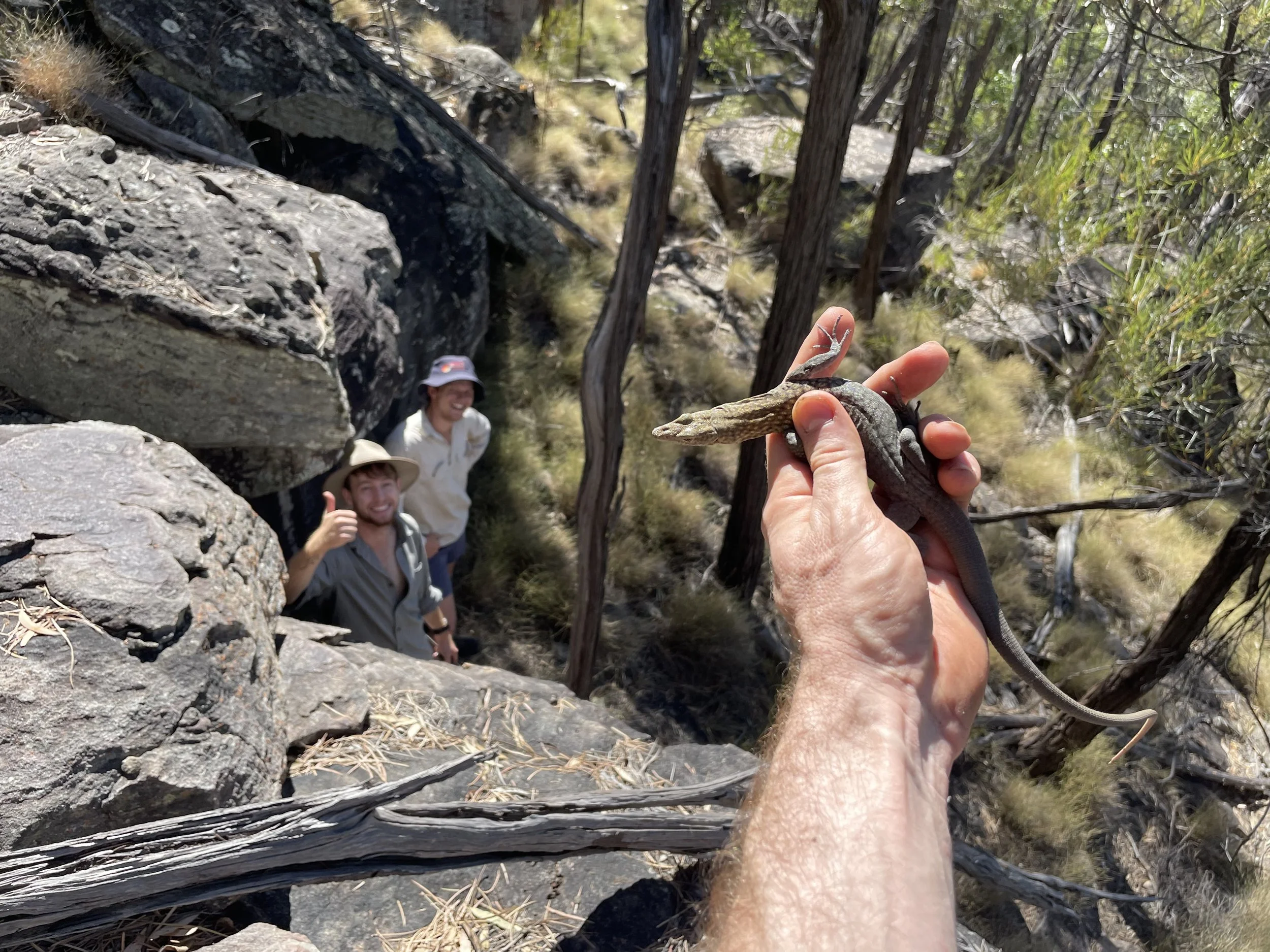
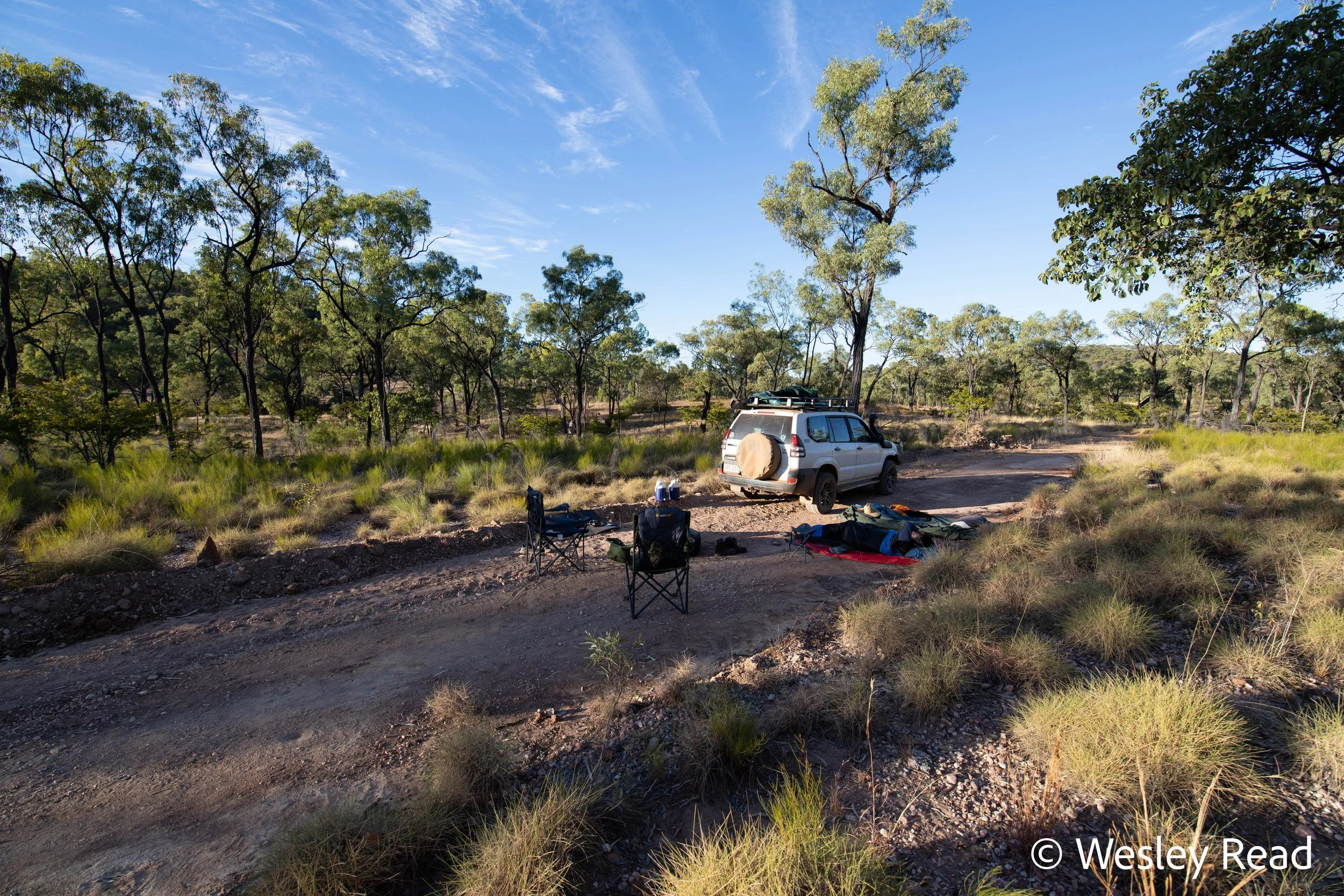
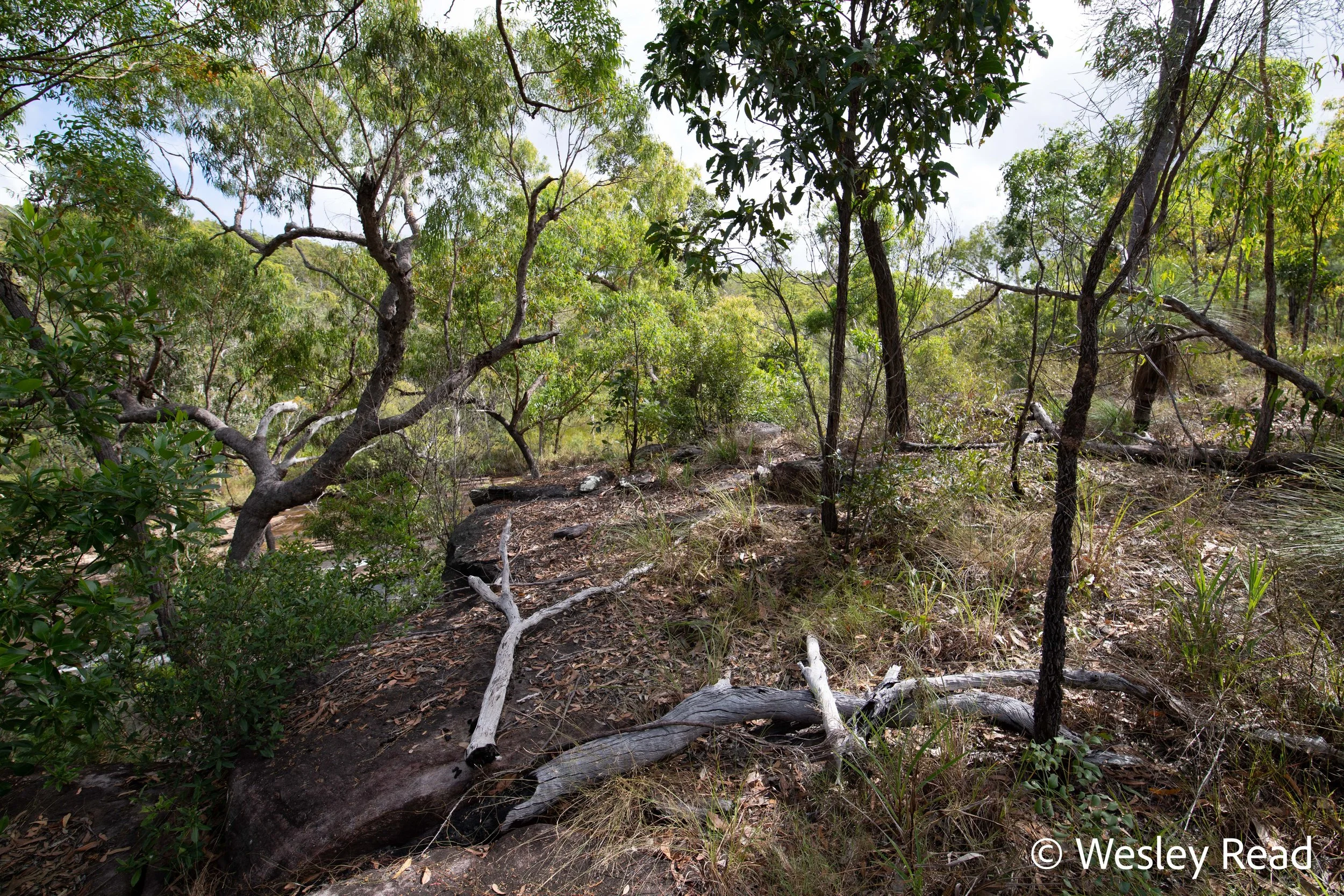
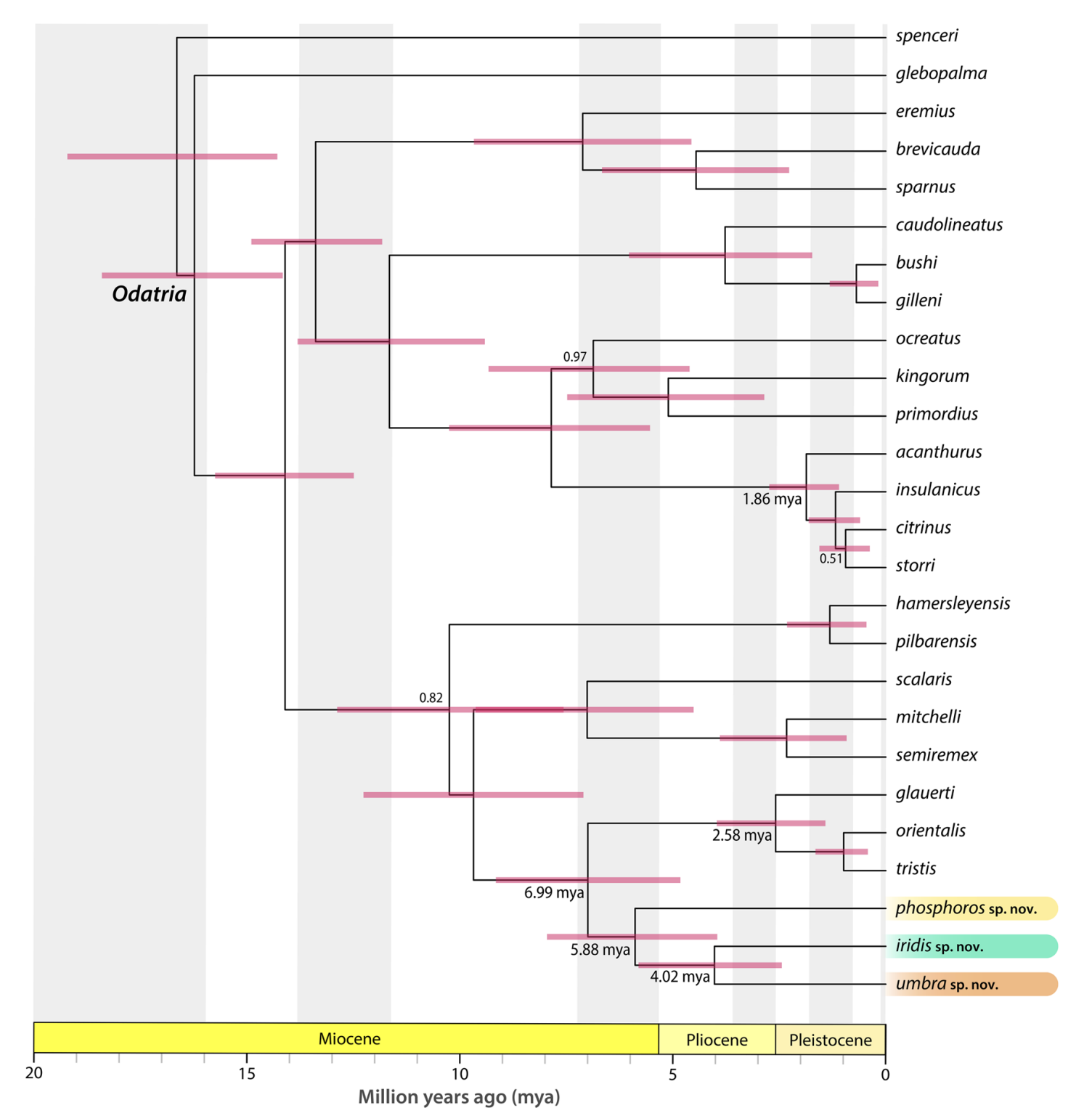
Sequencing, data analysis and writing ended up being a fairly rapid process relative to what some descriptions take. Fortunately for us, the results rather obviously supported the existence of three new species. The three form a relatively old clade that split from their closest relatives, the clade containing tristis, orientalis, kuranda, and glauerti, around 7 million years ago (probably). The youngest split — between iridis and umbra — occurred about 4 million years ago (again roughly — I’m rather dubious about divergence dating). Importantly though, these predate several other splits (regardless of absolute timing), such as between mitchelli and semiremex, and many of the spiny-tailed species. I find it rather interesting that they appear significantly older than the tristis and glauerti split, despite the younger two differing more widely in morphology. With this genetic evidence and some diagnostic morphological characters we had all we needed, although I certainly don’t recommend trying to count their midbodies. Most writing occurred in the second half of 2024 and early 2025, before initial submission mid 2025, acceptance in November 2025 after one round of review, and then publishing in February 2026. A boring sentence, sure, but I think a lot of people don’t realise how long these things take to get out there and that taxonomists are just slow. Papers really are a drag to produce, and the last couple months of waiting for proofs to check, and then trying to fix errors while others magically appeared in the manuscript was painful. Slightly unfortunately for us, two other Odatria papers were published right before ours, leaving us without time to make some minor tweaks and making it very slightly outdated immediately. I don’t think they stole too much of our thunder though and we put together a really sound and thoughtful (credit to Stephen and Carlos for this part) manuscript. With the ever-improving state of genomic sequencing and analysis, it would be good to see more future papers incorporate some of these advances to produce even more robust revisions.
Perhaps unsurprisingly, umbra will always be my favourite of the three and I'm particularly keen to find out if and where the three species ranges might contact. It’s been awesome to be involved in the description of north-east Queensland's first rock monitors and hopefully no one is too upset by the names we choose. I never thought green-head to be particularly accurate anyway. Congrats to all the co-authors!
You can find the paper here.
